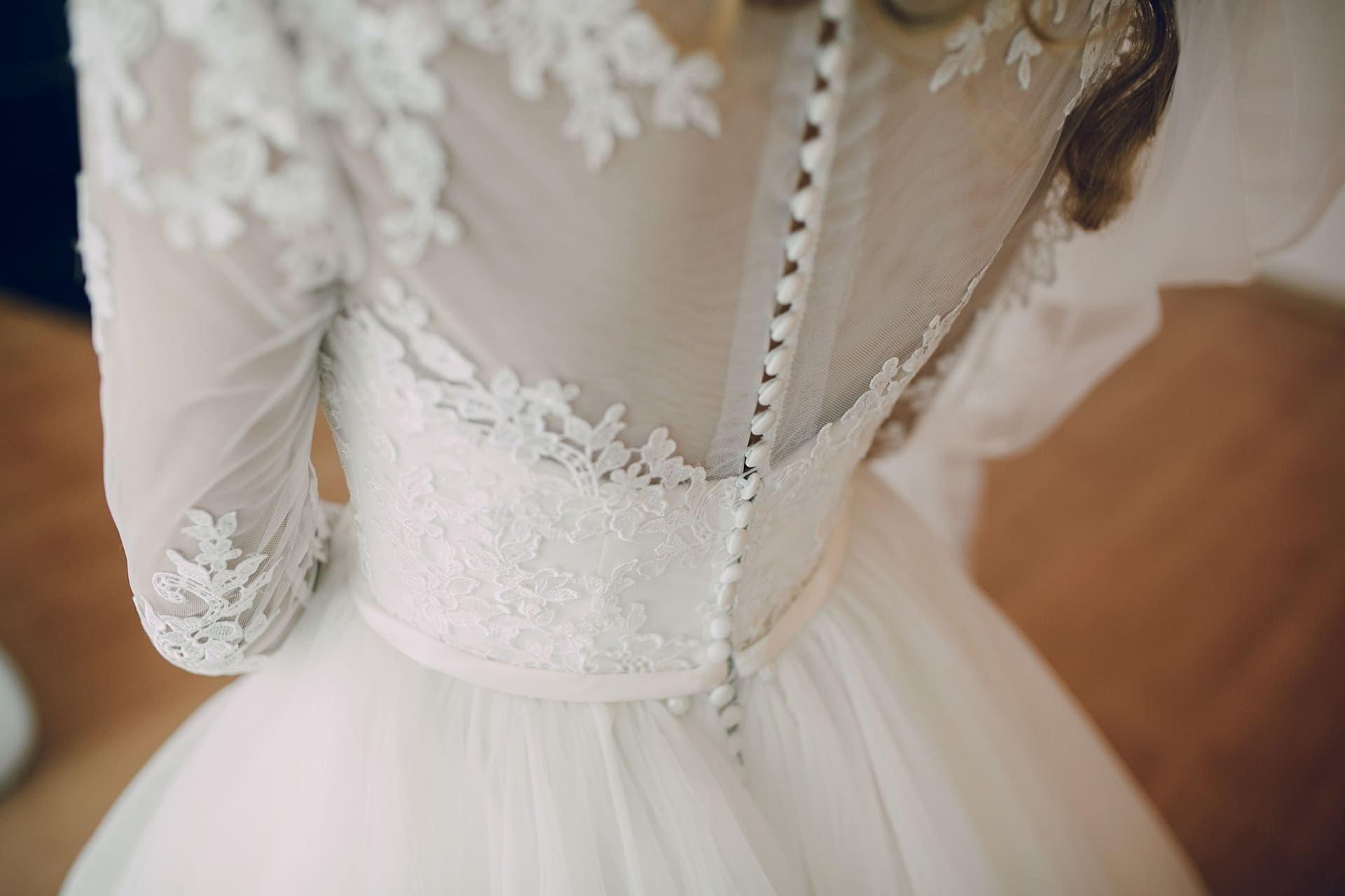
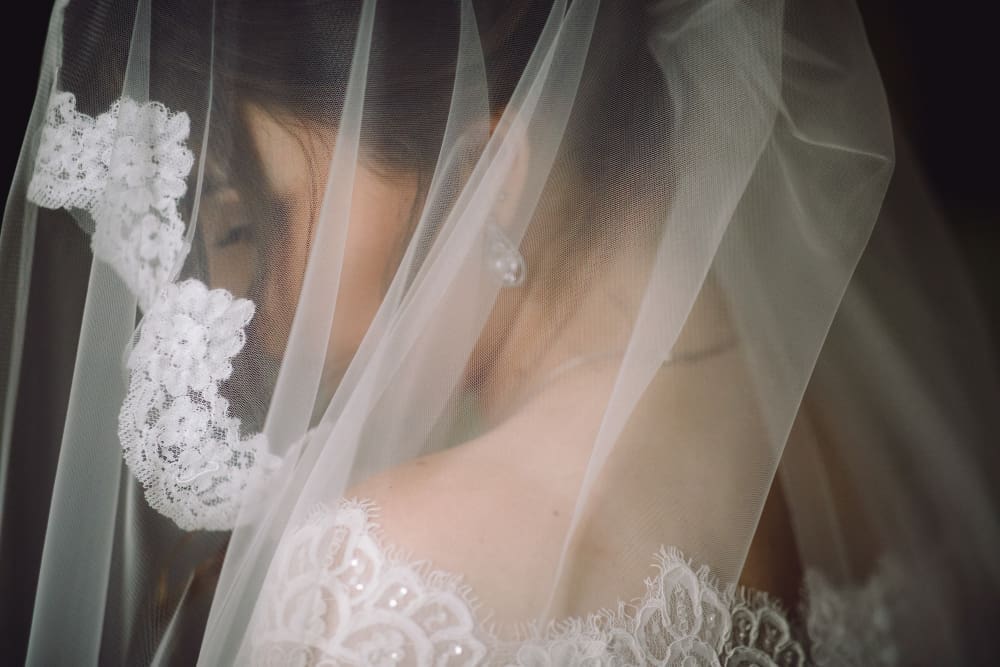
The dress glowed beautifully on the wedding day. And even when the celebration ended, you didn’t see any stains, so you felt safe to wait. You hung it up carefully and told yourself you’d deal with preservation later.
Then, later turned into months, and what felt like a short pause became a longer gap than you planned. You take it out again and see changes you can’t ignore – edges have yellowed, tiny spots have appeared, and you can’t ignore the musty smell.
So what exactly is happening beneath the surface of an unpreserved dress? In this post, you’ll learn the warning signs professionals see most often and why they appear gradually.
Yellowing is often the first visible change you notice when you revisit an unpreserved wedding dress. The dress may still appear intact, yet the color no longer appears as bright or as vibrant as it once did.
This shift usually happens gradually, making it easy to miss until it becomes hard to ignore. What’s important to understand is discoloration is typically a material reaction, not a sign of neglect or poor handling.
Discoloration often first appears along seams and stress points because those areas retain residue from handling and wear. Yellowing happens gradually, but once it appears, it’s hard to reverse.
These marks often show up years after the wedding, even when the dress looked spotless at first. The delay can make the damage feel mysterious, but there’s usually a clear explanation behind it. Many of these marks began as invisible stains on the wedding day.
These spots often appear in clusters or near high-contact areas such as the underarms, neckline, or hem. Since these changes happen gradually, the connection to the wedding day often goes unnoticed.
This type of damage isn’t easily detected until the dress is moved, folded, or handled again. By then, the fibers may no longer have the flexibility they once did. Fabric breakdown is subtle but significant.
This kind of damage often becomes apparent during inspections, cleaning attempts, or alterations years later. Once fibers break down, repairs become more complex and limited.
Embellishments add beauty, but they also need extra care. Lace, beading, and embroidery respond differently to time than the base fabric. Without proper support, these elements can shift, loosen, or deteriorate. The damage usually starts small and progresses slowly.
Loose beads or sagging lace often appear near the bodice, straps, or waistline. Once embellishments detach or distort, restoring them to their original placement can be difficult.
Folds may seem harmless at first, especially when a dress is stored neatly. Over time, however, repeated pressure in the same areas can leave lasting marks. These creases don’t behave like everyday wrinkles. Instead, they can become set into the fabric.
Permanent fold lines often show up when the dress is unfolded for viewing or display. Some creases smooth out with professional care, while others stay visible because the fibers have been damaged.
A musty or stale odor usually points to trapped moisture or reactions with storage materials. Even small amounts of humidity can linger in fabric for years. Over time, trapped moisture affects both the scent and the texture of the dress.
Odors tend to cling to inner layers and linings, making them harder to address later. While scent issues don’t always mean visible damage, they often signal changes happening within the fabric itself.
Wedding dresses can change in ways that aren’t always visible right away, especially after months or years in storage. If you’re unsure of the condition of your dress, J’s Cleaners can professionally evaluate it and help you understand how time and storage may have affected it.
As New York City’s trusted choice for wedding dress cleaning and preservation, we treat every dress with care, respect, and attention to the story it carries. Scheduling now helps prevent small, quiet issues from becoming harder to address later, especially before seasonal heat and humidity take their toll.
Call J’s Cleaners today, or schedule a secure, complimentary Pickup and Delivery Service online, to take the next step in caring for your dress with the same care with which you chose it.